How to Download Music From Mac to Iphone 8
Making music with your Mac: a complete guide
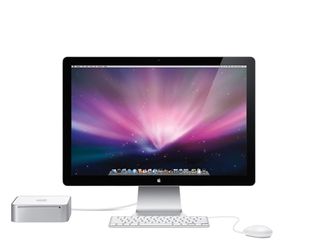
GarageBand rocks! It'south also adept at the blues, soul, dance and literally any other musical style you can throw at it. It can handle musical notation for the classically trained and offers gear up-made loops and patterns for those who aren't.
GarageBand is used by accolade-winning musicians as an idea-building tool too as in the studio or for creating complete albums. The software is as easy to use as any of the iLife apps and produces astounding results whether you're tone deaf or have played an instrument for years. So why aren't yous using it already?
Common excuses for never sampling GarageBand's features range from "It's too difficult" to "I wouldn't exist any proficient", while others just don't see whatsoever utilize for the software.
The latter is probably the hardest of all to argue since GarageBand offers and so much more than but musical limerick. Did you know y'all can record, edit and publish a podcast, score a motion-picture show, create a jingle, produce an iPhone ringtone or even make your own sound effects using the software?
Even if y'all don't accept a musical bone in your body, GarageBand will have something to offer you.
Launching the software, you're presented with a selection of projection options from a blank canvas, through interactive lessons (which we'll touch on later), to Magic GarageBand and iPhone Ringtones.
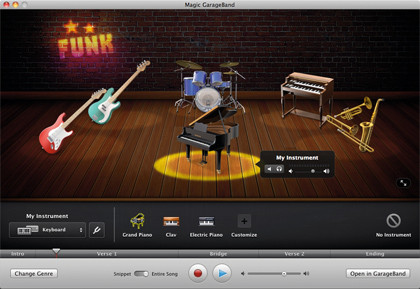
For the total beginner, Magic GarageBand is probably the best place to start. Select from whatsoever of the genres and you lot'll see a total band of instruments placed in front end of you on a virtual stage. You're gratis to swap instruments in and out of the organisation, adjust their volume and more than, and you can even select your ain instrument, which is a piano by default.
Once you're happy with the arrangement, hitting the Open up in GarageBand button opens information technology as a GarageBand project, which should give you a feel for how things work. This is the aforementioned interface you'll find for all GarageBand music projects, with all of your instruments placed on their own specific rail.
Each instrument has basic adjustments available, such every bit Mute and Solo controls as well every bit volume and pan settings. Muting, every bit you would expect, silences a rails, while solo mutes all other tracks. Pan adjusts the balance of the instrument to the left and correct of your mix and the volume control is self-explanatory.
If you striking the spacebar your rails volition begin to play back and, if you lot're feeling adventurous, you lot tin select your rails and press Shift+Command+1000 to bring up a software keyboard and play along. We defy yous not to enjoy yourself playing the blackness keys on the keyboard while the Slow Dejection project is playing – it's a nail!
Clicking the iii buttons at the bottom right shows the Loop Browser, Track Info or Media Browser displays. At any point in a project you tin can click on the plus button at the lesser left of the interface to add new tracks, which tin can exist software instruments that you play with the keyboard, existent instruments recorded through a microphone or an electric guitar plugged into your Mac. Just think of the possibilities!
Software instruments
One of the kickoff things yous need to empathise about GarageBand is the two major instrument types it uses, Real and Software. A existent instrument is 1 recorded past GarageBand through a microphone or the line-in port of your Mac, and a software musical instrument is a synthesised representation of an instrument with its sounds created by GarageBand.
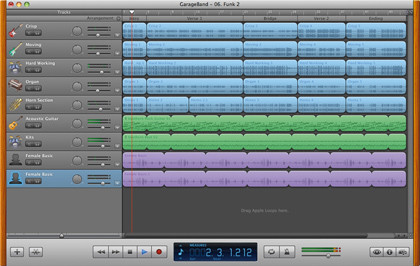
Real instruments appear as blueish parts on the timeline, recordings are regal and software instruments are green. One or all of these types of instruments can be used in a project, with the software instruments creating MIDI (Instrument Digital Interface, in case you were wondering) tracks and real instruments adding audio files to the project.
Loops from the GarageBand Loop Browser are a mixture of real and software instruments and can be dragged into your project from here. Should you be working in a particular calibration, loops tin can be sorted into major and pocket-size categories, and those that piece of work with both, so yous tin can find suitable sounds for your limerick.
When you record a existent or software musical instrument past selecting it and striking record, you can see the office being created on the timeline as yous play. Whether it's a recording, a loop or a software instrument part on the timeline, they can be dragged into new positions and fifty-fifty, in some cases, dragged onto different tracks and then the same part plays through a different musical instrument or outcome.
Hovering over the end of a role allows you to trim the length of it to your satisfaction, or if y'all hover over the top right of the function, you tin can loop it as many times every bit you wish. Both types of instrument can be edited, trimmed and looped within the project and can take effects practical to them.
The benefit of MIDI tracks is that private notes tin can be adjusted to modify the way they sound even after they've been recorded. Double-clicking on a MIDI segment in the timeline will open up the editing window within which y'all can elevate notes and adjust their pitch, velocity and timing, which is ideal if yous make mistakes when recording.
Similarly, double-clicking on a real instrument track brings upward an editing window that allows you to come across the waveform of the recording in more than detail, and even adapt the length and position of recorded notes using Flex Fourth dimension.
This engineering science has been passed down from Apple's Logic Studio package and allows you to almost magically dispense sounds. For instance, you lot tin find a single note and drag information technology to a new position to go on information technology in time or extend information technology so it plays longer. Yous can also determine a runway for Flex Time to follow the rhythm of, so that all of your other tracks remain perfectly in time.
Accessories and extras
While GarageBand and your Mac provide everything you need to brand music right out of the box, as you become more serious about your projects you might want to invest in a few additional tools to assist you produce your best piece of work.
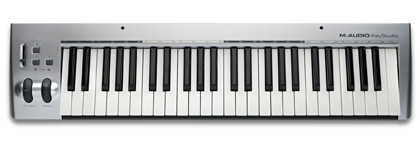
For those not intending to record real instruments, a USB MIDI keyboard is a worthwhile purchase. Relatively inexpensive, a keyboard of this type isn't only for playing piano parts as you might wait; it can also help you plot out drum sections and enables you to play whatsoever of the software instruments available in GarageBand more naturally.
Some MIDI keyboards fifty-fifty offer additional controls such as modulation and pitch wheels that GarageBand tin can recognise and utilize to your notes, and at that place are a number of keyboard sizes available, from unmarried-octave portable types to full-size studio versions.
A decent microphone is likewise a bonus if you lot desire to record singing, speaking or an unplugged instrument every bit part of your compositions. Once again, a USB device would exist platonic here, with some decent options offered by Blue Microphones and Samson.
Finally, if yous're a guitarist, so by far the simplest solution is to buy a cheap 1/4-inch to 3.5mm stereo adaptor and plug your guitar into information technology via your guitar cable, and then plug the stereo end into a inexpensive USB microphone, so into your Mac. That mode your guitar volition be available in apps like GarageBand for recording.
Taking things a petty farther, y'all might want to invest in an audio interface for your Mac that allows for multiple inputs and multi-track recording. Chiliad-Sound offers an fantabulous line of interfaces that connect to your Mac via USB and allows for multiple inputs to your GarageBand setup. GarageBand can handle more than i input, simultaneously recording into a project, so you could play guitar and sing, should you wish, or mic up a drum kit or backing vocaliser to back-trail y'all.
Chiliad-Sound likewise offers MIDI keyboards with congenital-in audio interfaces, so you tin can achieve complete GarageBand control from one device such as the KeyStudio 49i, which also features 2 headphone outputs, microphone and line inputs, and built-in pianoforte sounds so you tin use information technology as a standard keyboard too.
How to Download Music From Mac to Iphone 8
Posted by: perryyonge1978.blogspot.com


0 Comments